
Newton County Arrest Records and Court Charges
A Newton County arrest record is the record of the arrest itself. It names the person taken into custody. It also lists the arresting agency, the date, and the booking. In Newton County the Sheriff is the county jailor. The Newton County Sheriff's Office keeps the jail docket. So booking and custody detail sit with the Newton County Sheriff, not the courthouse counter. The arrest does not set the final charges. Charges come later. A Newton County prosecutor reviews the facts. Then the formal court charges are filed with the clerk. Once filed, they become the charge record the court tracks through the case.
The two records are easy to mix up. The arrest record lives on the booking side. It sits with the Newton County Sheriff and the jail docket. For the jail roster and county custody channels, see the Newton County inmate records page. The court charge record is different. It holds the court charges after arrest. That means what the prosecutor actually filed. It also shows how each count is tracked. The full case file, with pleas and disposition, sits in the Newton County criminal case record. The charge record falls between the two, on the path from arrest to charge.
Local news shows how arrest reporting works in Newton County, such as the Newton County arrest blotter compiled from the jail.

Those Newton County blotter items list bookings. But they stress that an arrest is only an accusation. It is not a court charge that has been proven.
How to Find Newton County Arrest Records and Charges
Charges and charge status show up in the Newton County court case file. Many Circuit and Chancery cases are reached through Mississippi Electronic Courts. That is the statewide filing and case system. Public online use needs registration and a yearly fee. The portal can also go down. Then the local clerk is the steady channel. Booking and arrest detail are not in the court index. That part lives in the jail docket held by the Newton County Sheriff's Office. For felony charges filed in Newton County Circuit Court, call the Circuit Clerk at 601-635-3368.
- Open the Newton County court case search through Mississippi Electronic Courts, or call the Circuit Clerk if the portal will not load.
- Search by the defendant name, or by the case number if you have it.
- Open the case and read the list of charges filed in it.
- Check each charge for its statute code, its level, and its current status.
Some charges roll up into a statewide criminal history. The state keeps that broader record. The Newton County Circuit Clerk also runs a criminal records search for a $10 fee. For one Newton County case, the court file is the fastest read. For a broad history, the state repository is better.
How Charges Get Filed After an Arrest: Complaint, Information, and Indictment
The charge record begins when a charging document is filed. The arrest comes first, at booking. Then a prosecutor or a grand jury sets the charges in writing. In Newton County, felony cases tend to move toward the District Attorney for the 8th District and the Newton County Circuit Court. Many lower matters route through the County Prosecuting Attorney, Justice Court, or a municipal court. The three main charging documents are the complaint, the information, and the indictment. Each one can start a case. The table below sums up who files each.
| Complaint | Information | Indictment | |
|---|---|---|---|
| Filed By | Officer / Prosecutor | Prosecutor | Grand Jury |
| Common For | Misdemeanors | Many felonies | Serious felonies |
| Starts | The case | The case | The case |
Charge Status and What It Means
Charges do not stay frozen. As a case moves, a charge can be amended, reduced, added, dropped, or dismissed. A reduced charge drops a count to a lower level. A felony can become a misdemeanor. A dropped or dismissed charge ends that count. Reading the status tells you where each count stands. These terms appear often in Newton County court files.
| Status | What It Means |
|---|---|
| Pending | The charge is filed and active. No final outcome has been entered yet. |
| Amended / Reduced | The charge was changed, often to a different count or a lower level. |
| Dismissed | The court ended the charge. It is no longer being pursued. |
| Nolle Prosequi | The prosecutor chose to drop the charge and not move forward on it. |
Note: A dismissed or dropped charge can still appear in Newton County arrest and court records unless it is later expunged under Mississippi law.
Charges vs. Convictions
Being charged is not the same as being convicted. A charge is an accusation. It means a Newton County prosecutor believes there is enough cause to bring the case, while a conviction comes only after a guilty plea or a verdict that meets a far higher legal standard. The State must prove the case beyond a reasonable doubt. Newton County arrest records can show open charges that never end in a conviction. The full result, with the plea and the sentence, is part of the Newton County criminal court records for the case.
| Charge | Conviction | |
|---|---|---|
| Stage | Accusation | Verdict or plea |
| Burden of Proof | Probable cause | Beyond reasonable doubt |
| Public Record | Yes | Yes |
Court outcomes read differently from arrest reports, as shown in coverage of Newton County Circuit Court guilty pleas and drug court orders.

That Newton County report lists pleas, sentences, probation, and program terms. They appear only once a charge moves to a conviction.
Sealed vs. Expunged Records
Some Newton County charge records can be closed off later. Sealing hides a record from public view. Expungement goes further. It removes the record from public access under a court order. In Mississippi, certain misdemeanor and felony cases qualify for expungement once all fines, costs, and restitution are paid, though felony, DUI, domestic, and repeat cases follow stricter eligibility rules. The Newton County Circuit Clerk lists a $150 petition after those costs are settled. Eligibility is fact specific. Legal help is wise.
| Sealed | Expunged | |
|---|---|---|
| Visibility | Hidden from public | Destroyed / treated as never existed |
| Law Enforcement | Limited access | Very limited |
| Eligibility | Set by statute and court order | Limited cases under Miss. Code 99-19-71 after costs are paid |
Charge Codes and Severity Levels
Each charge in a Newton County case ties to a statute. The code points to the exact Mississippi law behind the count. Severity sets how serious the charge is. Felonies are the most serious. They head to Newton County Circuit Court when indicted. Misdemeanors are lower. They often stay in Justice Court or a municipal court. City ordinance and minor traffic counts sit at the bottom. One arrest can spin off several charges at once. Each charge carries its own code, level, and status.
The level also shapes which prosecutor handles the case. The District Attorney for the 8th District handles felony cases in Newton County Circuit Court. The Newton County Prosecuting Attorney handles many misdemeanor and youth court matters. Knowing the level helps you pick the right Newton County office to call.
Statewide Charge and Criminal History Lookups
A Newton County case file covers one matter at a time. A statewide criminal history pulls charges together across the state. That broader record runs through the Department of Public Safety. It does not run through the county clerk. Formal background checks and rap-sheet requests follow the state process. For outcomes after a sentence, the Department of Corrections keeps an MDOC inmate search and a parolee search, while the free VINE service tracks custody status and sends alerts. These tools do not replace the Newton County court file. They just fill in the bigger picture.
Some Newton County cases are federal, handled by the U.S. Attorney for the Southern District of Mississippi.
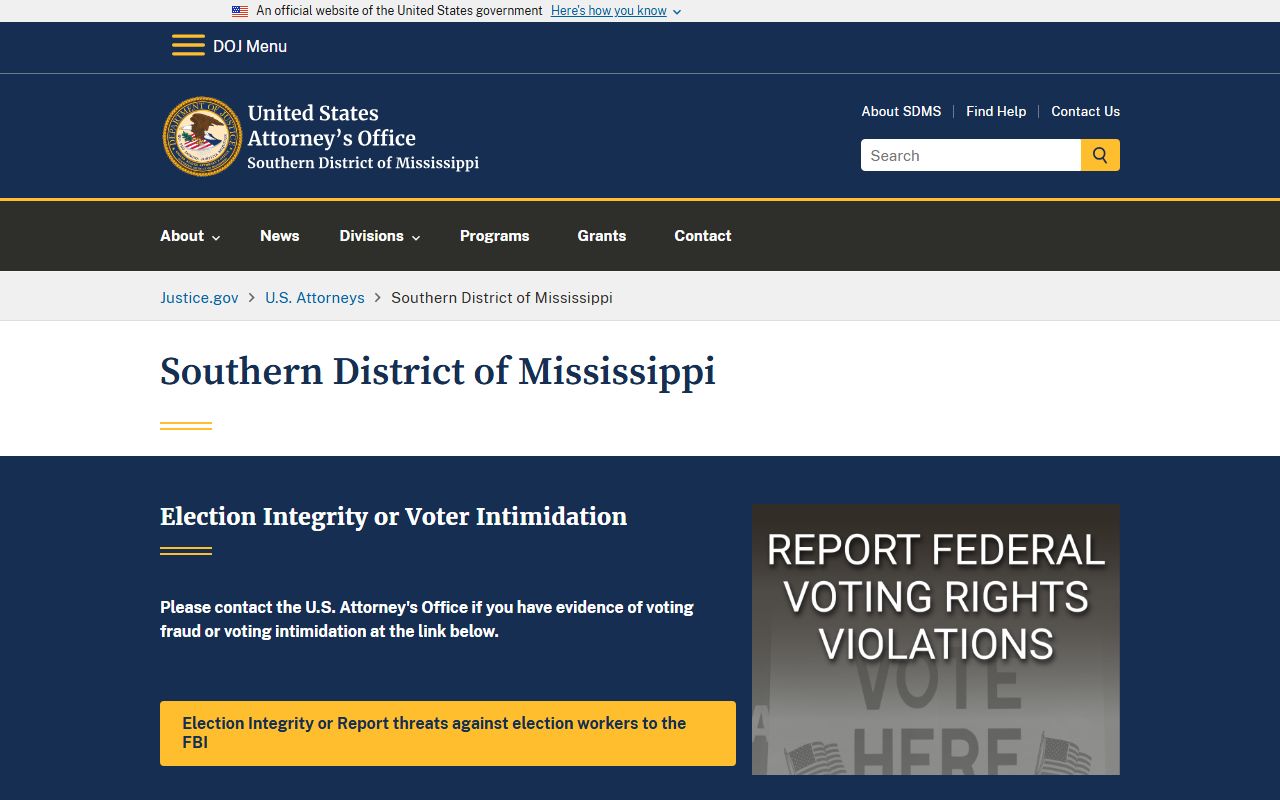
Federal charges follow a separate track. They do not appear in the Newton County court file or the local jail docket.
Background Check Considerations
There is a real difference between a casual lookup and a formal background check. A casual search is for general information. A formal check is different. The kind used for hiring, housing, or credit falls under the Fair Credit Reporting Act. That law sets strict rules on accuracy and use. Newton County arrest and court records can be incomplete or out of date. Always confirm a charge and its status with the Newton County office that holds it.
Important: This site is not a consumer reporting agency under the FCRA, and its records may not be used for credit, employment, tenant, or insurance screening.
Restricted Charge Records in Newton County
Not every Newton County charge record is open. Youth court records are confidential. They are not handled like adult files. Sealed cases may show little or nothing on the public docket. Expunged charges are removed from public access under a court order. Charges tied to an open investigation can be withheld. Personal identifiers such as Social Security and account numbers are protected. When access is unclear, ask the Newton County clerk that holds the file, because the Mississippi Public Records Act guides what the public can inspect and what stays closed.
Note: Juvenile and sealed charge records stay closed by law, so the Newton County Sheriff and clerks cannot release them without a court order or proper authority.